Chimborazo Summit Climb
The farthest point from the centre of the Earth - 6,310 m
- Difficulty: Demanding
- Ecuador's highest summit
- Farthest point from Earth's centre
- Refuge or high camp at 5,500 m
- All technical gear included
- 9-10 hour summit push
-
Duration2 days / 1 night
-
Group sizeRope teams of 2 climbers per ASEGUIM guide
-
DifficultyDemanding
-
DepartureEcosportour office, Venezuela N11-99 y Carchi, Quito Historic Center (corner of the Basilica del Voto Nacional), 8:30 a.m. Hotel pick-up along the route if you are on a multi-day programme.
-
Departure daysEvery day, with a minimum of 2 climbers (private excursion available for 1 person at double the rate)
-
LanguagesEnglish, Spanish
Tour overview
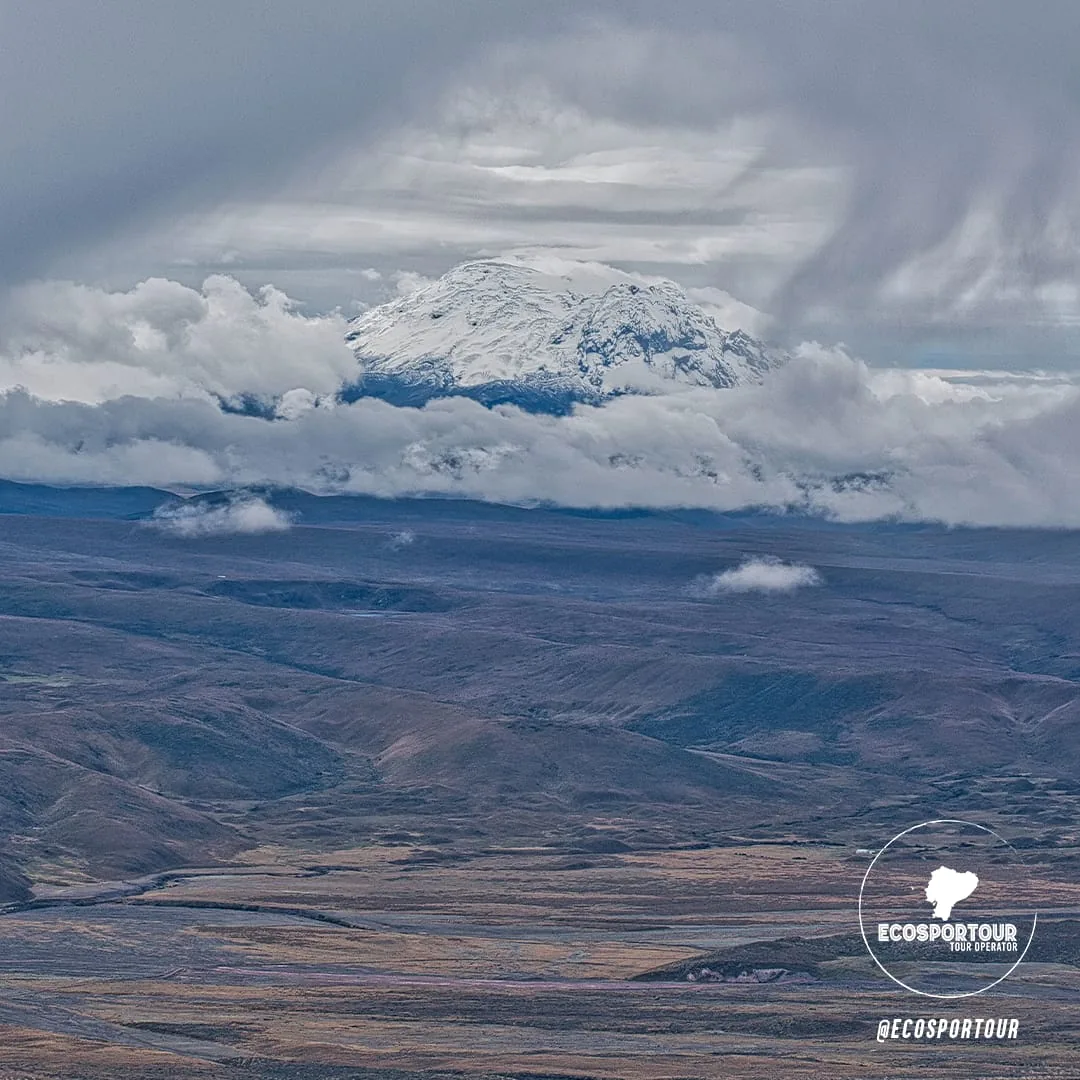
Measured from the centre of the Earth, Chimborazo’s summit stands 1,811 m (5,942 ft) beyond Everest. It is also Ecuador’s highest mountain at 6,310 m (20,702 ft), a god to the ancient Puruha people and the peak on the national coat of arms.
Three summits, a humpback silhouette, and a view from the top that runs across the Andes to the Amazon and out towards the Pacific. Reinhold Messner has climbed here; Baltazar Ushca, the last iceman of Chimborazo, still cut blocks of glacier ice on its flanks at 76.
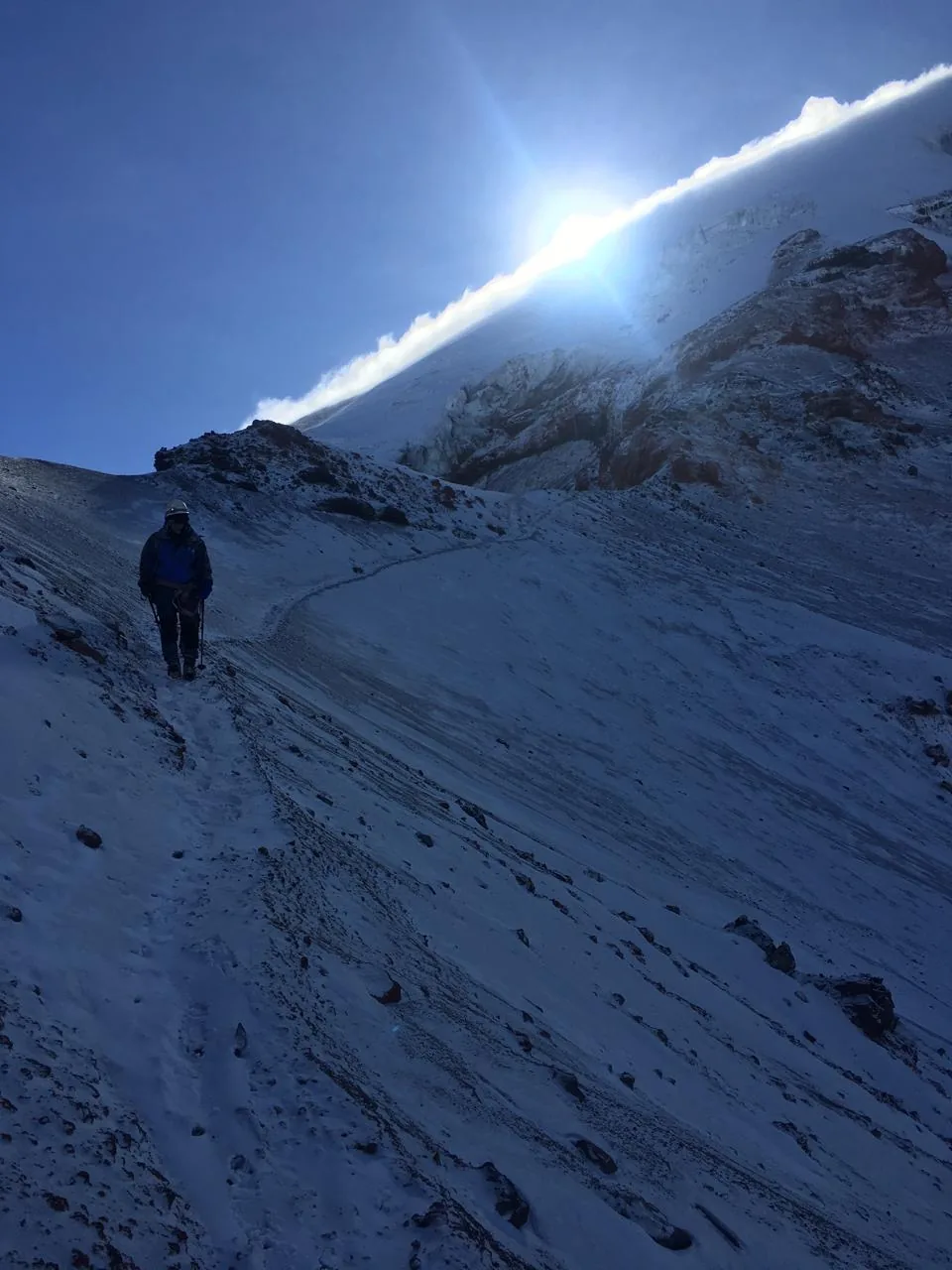
Difficulty is high, but there are no climbing walls. The routes are defined and walked, on slopes of 30 to 45 degrees. We start from the Hermanos Carrel refuge at 4,800 m, reached directly by 4×4, or push on to the high camp at 5,500 m, which measurably increases your chances of topping out.
The summit attempt starts at 22:00 from the refuge and takes 9 to 10 hours on ice to reach the main summit at dawn. 4×4 transport, refuge or camp, meals, ASEGUIM-certified guide and every piece of technical equipment are included.
Itinerary
-
Day 1: Quito to the Hermanos Carrel refuge (4,800 m) or the high camp (5,500 m)
Equipment check with your guide at our Quito office at 8:30 a.m.; if you are already travelling on one of our programmes we collect you at your hotel along the route. We drive southwest to the village of San Juan for lunch, then continue by 4x4 to the parking area and the Hermanos Carrel refuge at 4,800 m. With the refuge option you rest here; with the high-camp option you gear up and walk roughly 3 hours to camp. Afternoon briefing and glacier school, weather permitting. Dinner and rest.
-
Day 2: Summit push (6,310 m) and return to Quito
From the refuge the summit attempt starts at 22:00; from the high camp we leave at midnight. Tea, packs ready, then 9 to 10 hours of very slow walking on ice at 30 to 45 degrees to reach the main summit at dawn, between 6 and 7 a.m. Descent to the refuge, breakfast, and back in Quito at around 5 p.m. - or a drop-off at a bus terminal if you are continuing your trip.
What's included
Included
- Private 4x4 transport
- ASEGUIM-certified bilingual guide (Spanish/English)
- Meals: lunch and dinner on day 1, breakfast on day 2
- Refuge with bed and mattress, or camping equipment for the high camp
- Briefing and glacier school, weather permitting
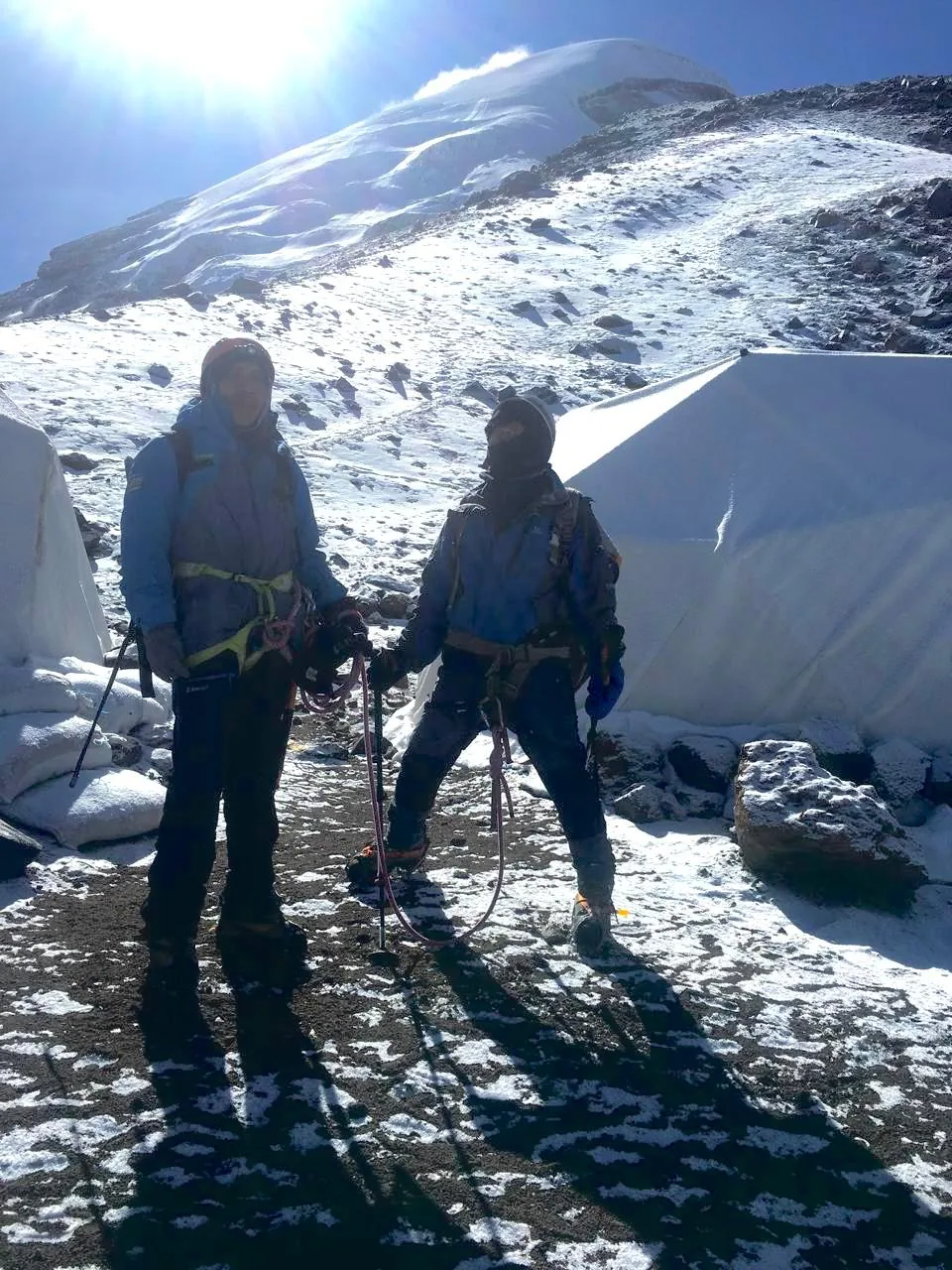
- Technical mountain equipment: plastic boots, crampons, harness, carabiner, helmet, head torch (without batteries), 2-finger outer gloves, gaiters, ice axe, waterproof trousers, waterproof jacket and rope
Not included
- Extra food and drinks; 2 litres of water per day
- Personal equipment (see what to bring)
- Sunscreen
- Sleeping bag
- Sunglasses
- Camera
- AAA batteries for the head torch (2 pairs)
- Snacks
- Gratuities
What to bring
- Lycra-type base layer shirt and trousers
- Fleece jacket and trousers
- Inner gloves
- 2 to 3 pairs of socks
- Two backpacks: one 40 L and one 15 L
- Buff
- Sleeping bag
- Sunglasses and sunscreen
- 2 litres of water per day, plus snacks
- 2 pairs of AAA batteries for the head torch
- Camera
Good to know
-
How much harder is Chimborazo than Cotopaxi?
It is a clear step up. Our own rating is 5/5, the summit push is 9 to 10 hours instead of 7 to 8, and the average temperature up high is around -5 C (23 F). The terrain is still walked rather than climbed, on slopes of 30 to 45 degrees.
-
Refuge or high camp - which should I choose?
The high camp at 5,500 m shortens the summit day and increases the percentage of climbers who reach the top. The refuge option means resting at Hermanos Carrel at 4,800 m and starting at 22:00. Tell us which you prefer when you book.
-
Do I need previous experience?
No previous experience is required, but the difficulty is high and solid acclimatization is essential. We strongly recommend climbing acclimatization peaks before attempting Chimborazo.
-
What are the refuges on the mountain?
Hermanos Carrel at 4,800 m, reached directly by 4x4, and the Whymper refuge at 5,000 m, about 45 minutes further on foot. There is also a camp area at 5,500 m.
-
What time do we get back?
In Quito at around 5 p.m. on day 2. If you are continuing your journey we can drop you at a bus terminal instead.
Book this tour
Tell us your dates and we will confirm availability within 24 hours.
More tours in Climbing
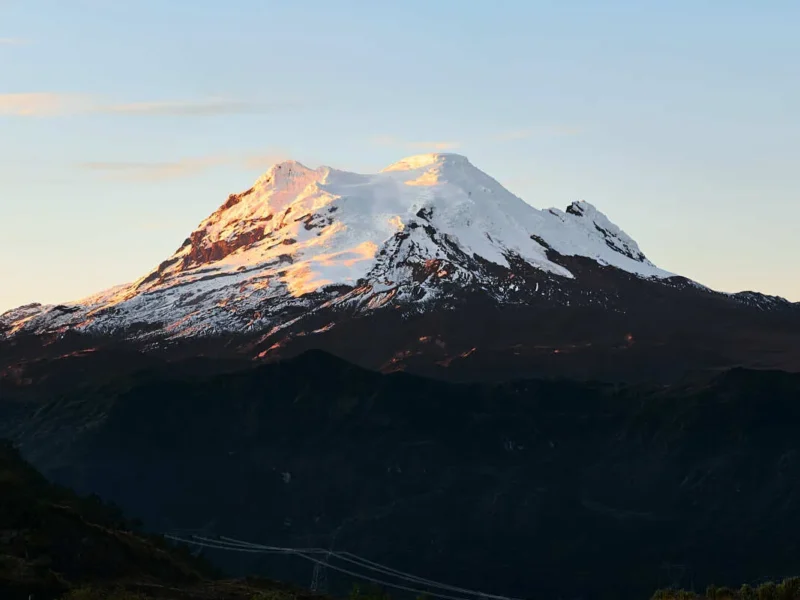
Ecuador's wildest big volcano - 5,704 m, camp and alpine ice
- Difficulty: Challenging
- Ecuador's fourth highest peak
- Base camp at 4,600 m
- Technical alpine ascent
- Camping equipment included
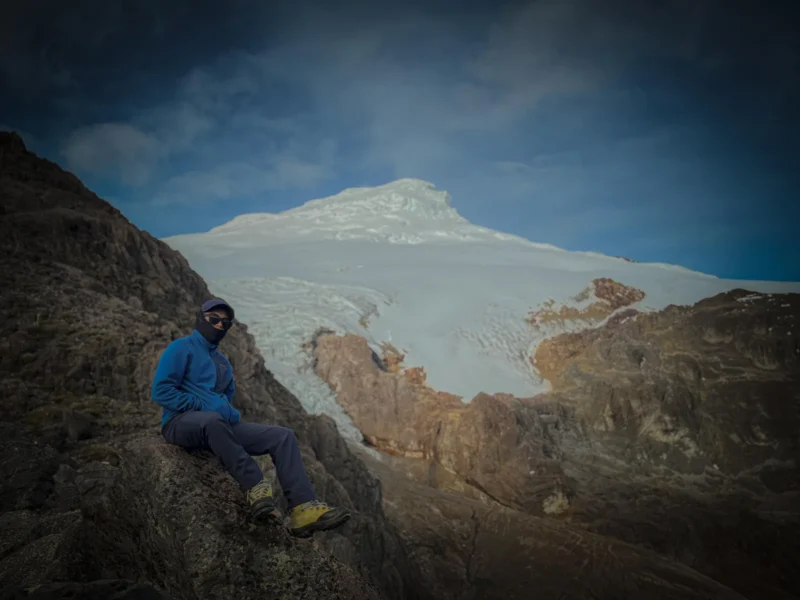
The only glacier on the equator - 5,790 m, quiet routes
- Difficulty: Challenging
- Only glacier on the equator
- Ecuador's third highest peak
- 4x4 to the refuge at 4,600 m
- Glacier school included
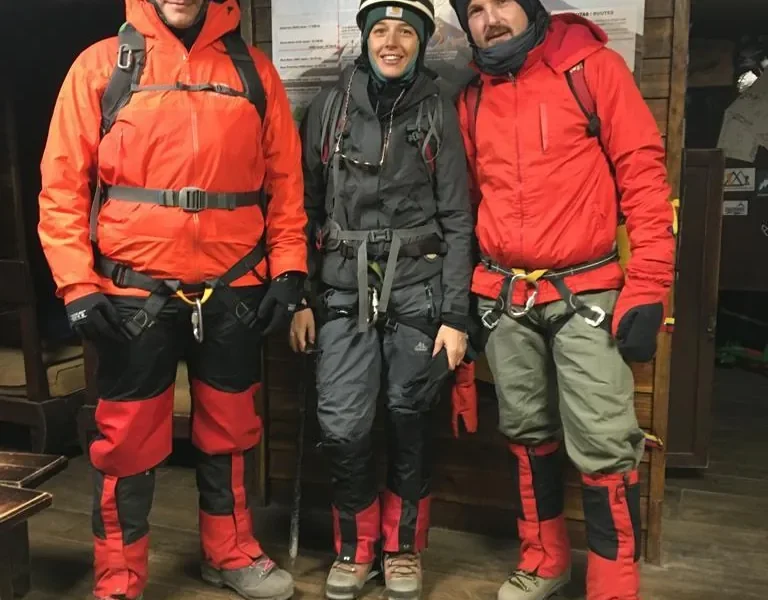
Ecuador's iconic glacier cone - 5,897 m, walked not climbed
- Difficulty: Challenging
- 5,897 m active volcano
- ASEGUIM-certified guide
- Technical gear included
- No experience needed